An Anchor of Style: The Navy Blazer, its History, and How to Wear it.
If there is one garment that serves as the exoskeleton of a gentleman’s wardrobe, it is the Navy Blazer. It’s like the great equalizer of menswear: at home in a boardroom, a yacht club, or thrown over a t-shirt for Sunday brunch or hanging out with the fellas.
But before it became the symbol of American "Prep," it was born from British necessity. The story of the navy blazer is actually two stories: one of royal discipline, and one of “collegiate rebellion.”
A Tale of Two Jackets
Fashion historians often debate the true lineage of the blazer, and the truth likely lies in a collision of these two events:
1. The Royal Navy Theory (1837)
The most popular legend takes us to the deck of the HMS Blazer in 1837. The frigate’s captain, upon hearing that Queen Victoria was scheduled for an inspection, realized his crew’s motley assortment of clothes was unacceptable.
Desperate to impress the young Queen, he commissioned matching short jackets made of navy-blue serge, finished with shining Royal Navy brass buttons. Queen Victoria was reportedly so charmed by the "Blazer’s" smart new look that she decreed the style be adopted across the entire Royal Navy. This jacket, technically a "reefer" jacket, is the grandfather of the double-breasted blazer we know today.
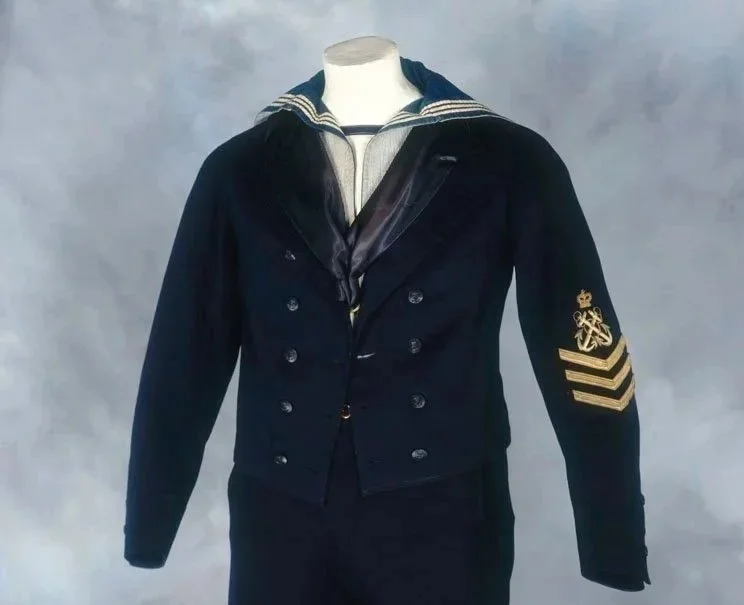
Humble beginnings…
Royal Naval uniform: pattern 1857
Petty Officer's (1st Class) badge - Royal Museums Greenwich
2. The Rowing Club Theory (1825)
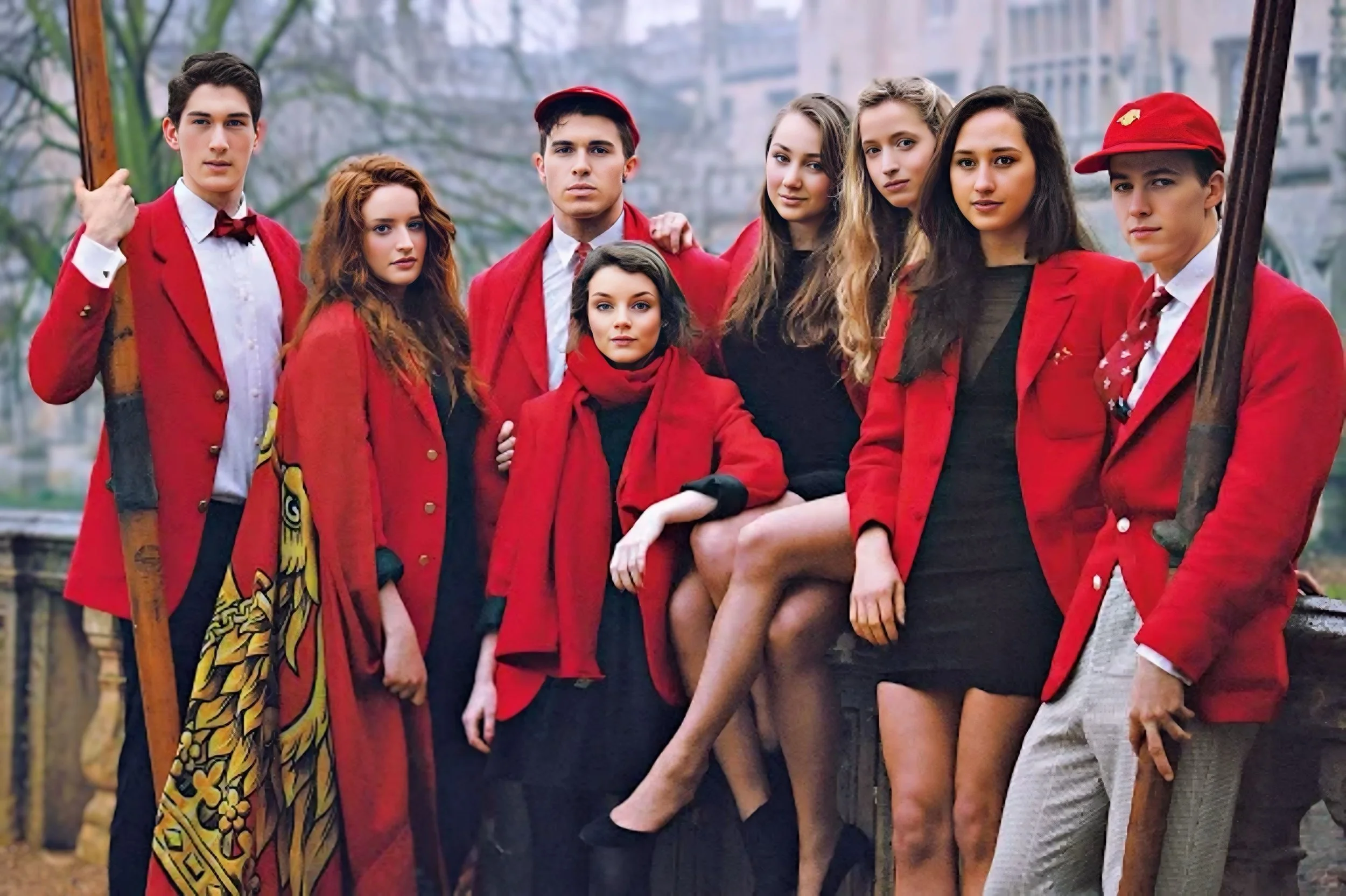
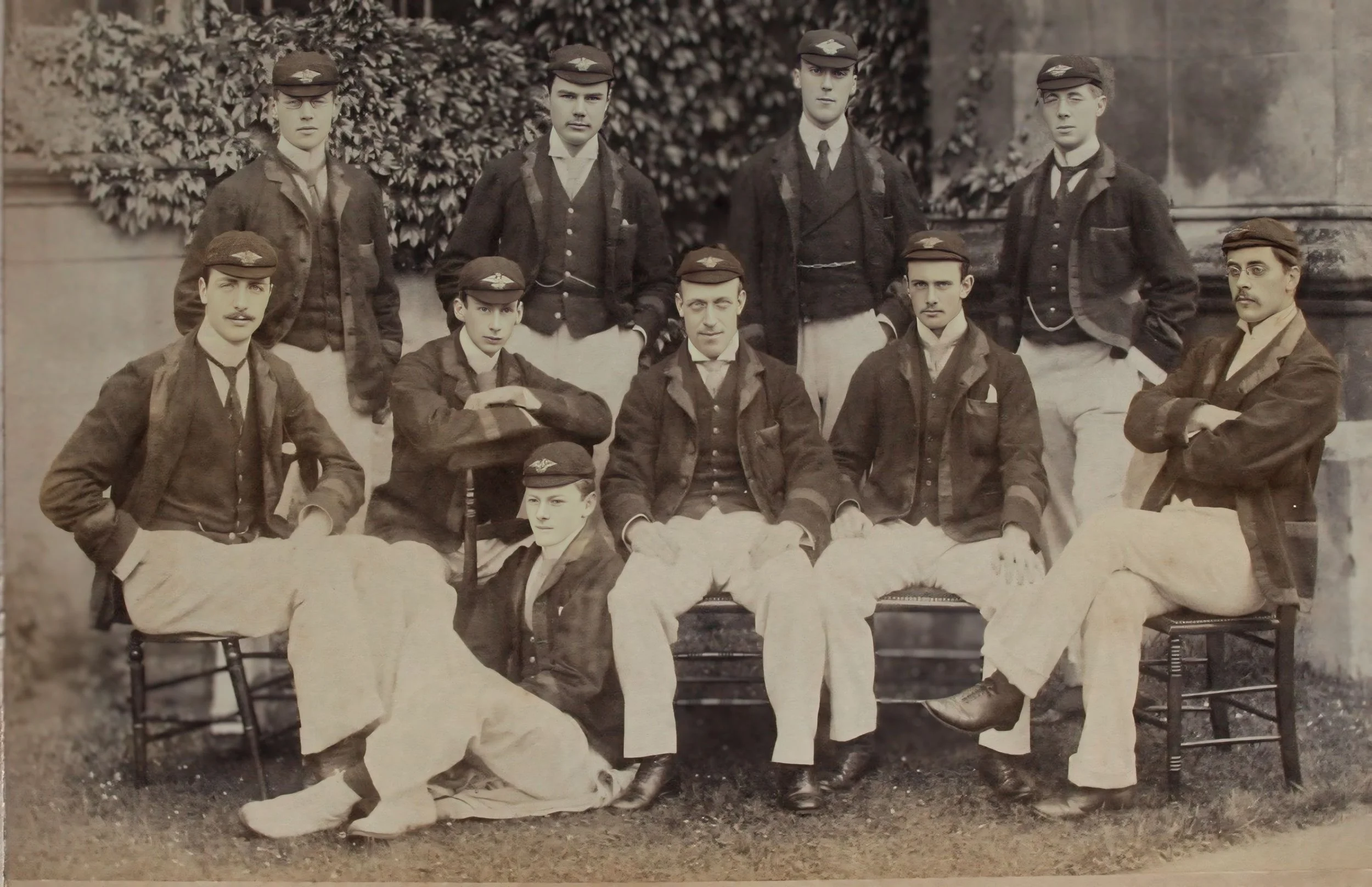
The second origin story suggests the term "blazer" didn't refer to the ship, but to the color. In 1825, the Lady Margaret Boat Club at St. John’s College, Cambridge, wore bright crimson flannel jackets. These jackets were said to be "ablaze" with color on the water.
While the naval jacket gave us the structure (navy wool and brass buttons), the rowing jacket gave us the spirit: a sporting garment meant to be worn by clubs, teams, and men of leisure.
Crossing the Pond: The Ivy League Adoption
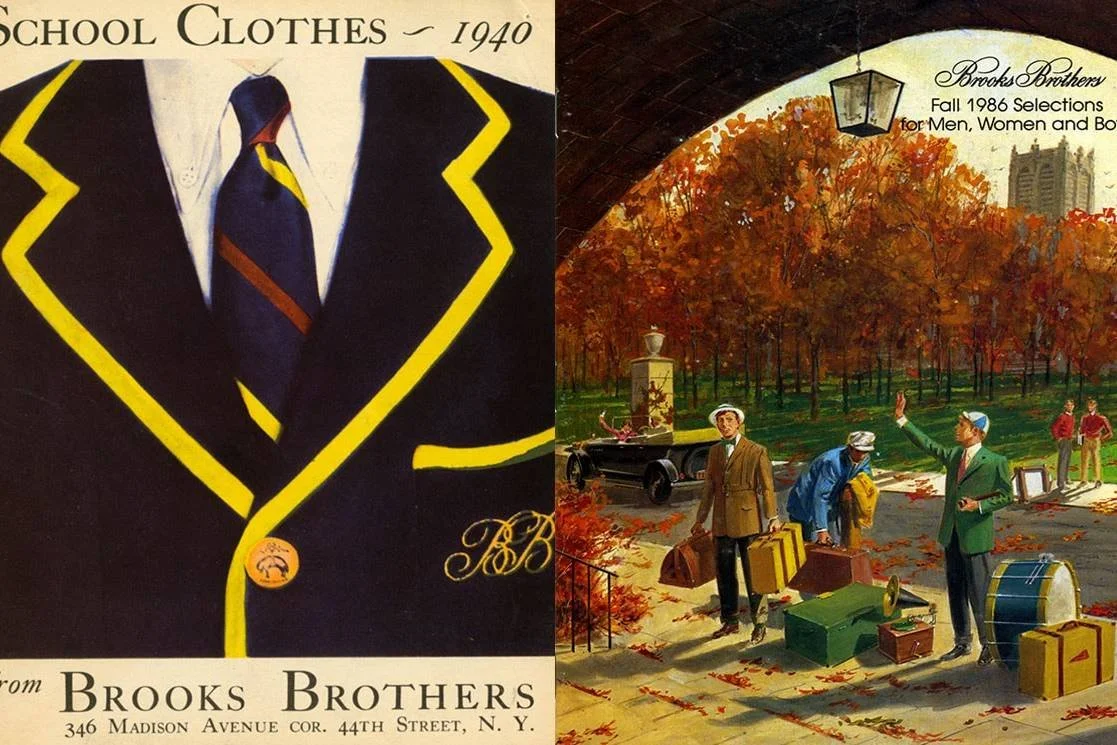
By the early 20th century, the blazer had migrated from British rowing regattas to American campuses. It became the uniform of the Ivy League: Princeton, Yale, and Harvard students adopted the "sack suit" cut (unstructured, comfortable) and adorned them with university crests. This trend grew in part due to Brooks Brothers’ 1930 catalog, which featured a somewhat simpler version of a blazer, opting for a solid Navy color in leu of the more popular colorful stripes. However, wanting to add their own flair, they replaced the University crests for their own version, with “BB” on the chest and added bold colored accents along the lapels.
While successful, the blazer remained a garment of the privileged: a rigid signifier of old money and closed doors. It needed to be dusted off, stripped of its exclusivity, and made more accessible for the everyday wearer.
The “Polo shirt”
The “polo shirt” with its button-down collar was a then-recent innovation by Brooks Brothers in the early years of the 20th century, and Brooks Brothers’ Ivy associations were illustrated by Princeton alum F. Scott Fitzgerald in his debut novel, This Side of Paradise, in which Brooks is twice mentioned for its well-regarded wares.
Enter the Ralph Lauren Effect:
If the British invented the navy blazer, Ralph Lauren perfected it for the modern American.
Before Ralph Lauren launched Polo in 1967, the navy blazer was often boxy, stiff, and strictly traditional. Lauren, a Bronx-born dreamer with a deep appreciation for the "Old World" aesthetic, saw the blazer not just as a uniform, but as the symbol of the true American lifestyle - Elegant and luxurious, while simultaneously preppy and comfortable.

The Big Screen:
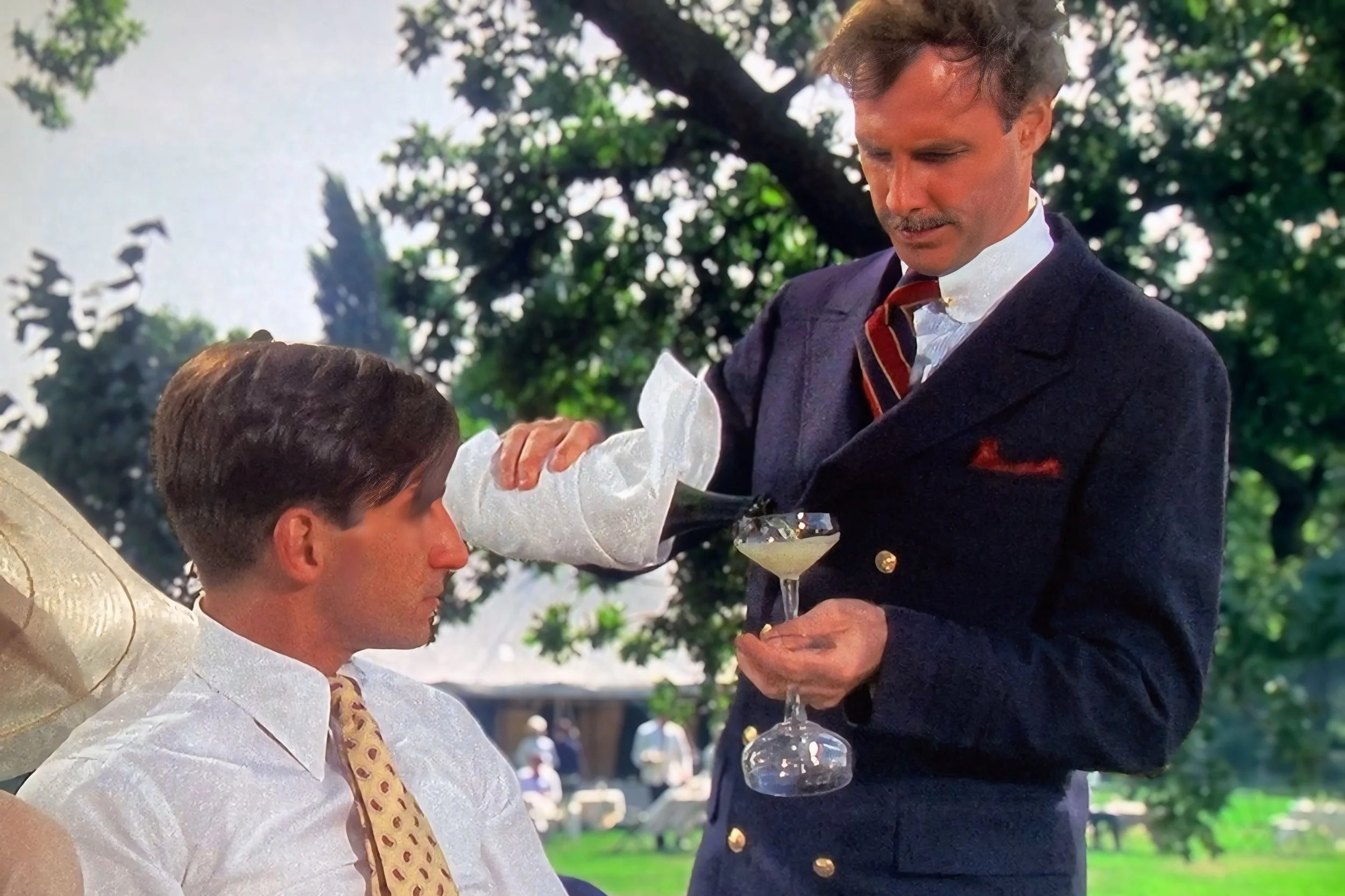
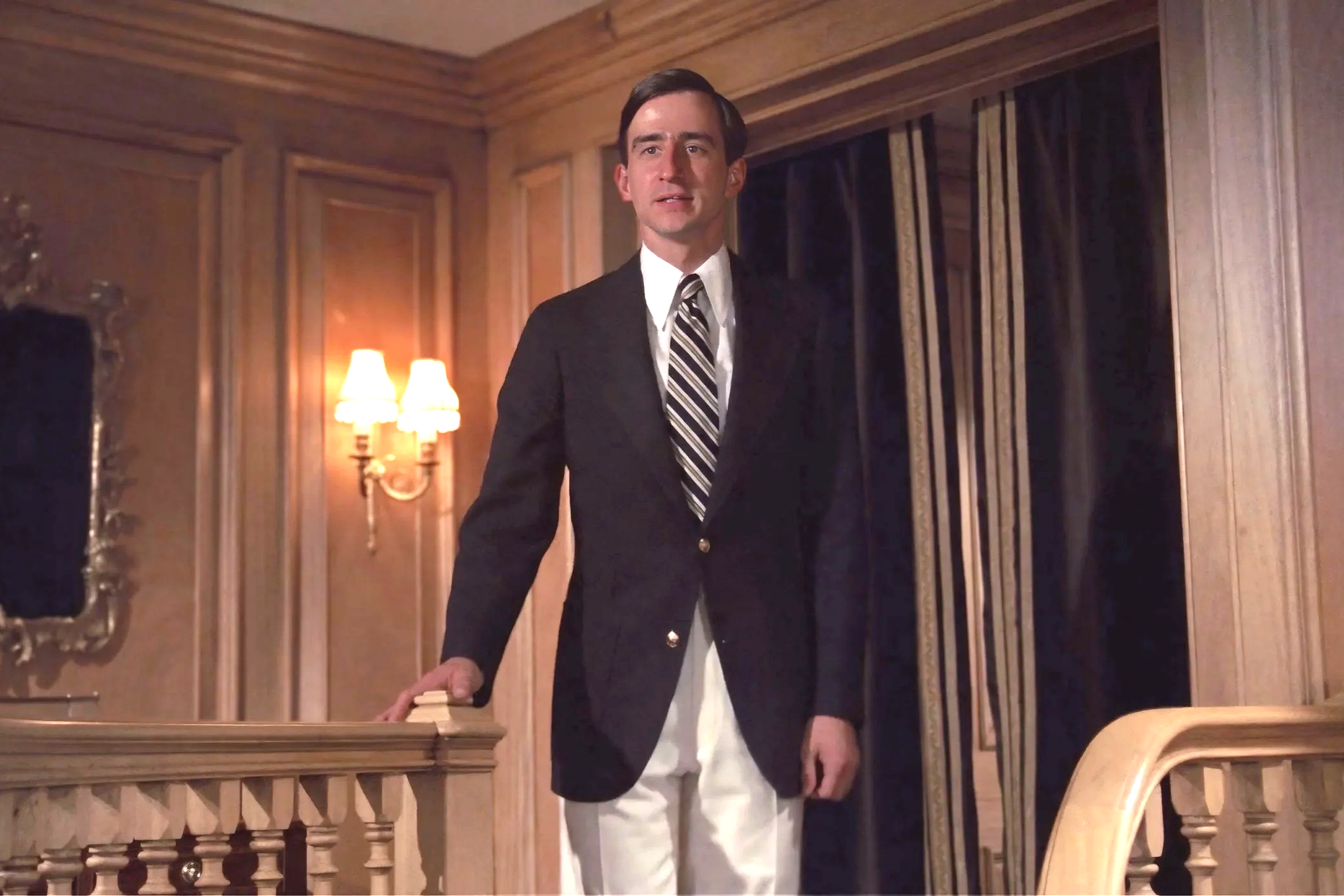
When Lauren outfitted the male cast of The Great Gatsby, magic happened. He wasn't just designing and making the clothes; he was telling the world that luxurious elegance and everyday comfort could peacefully co-exist. The navy blazer became the costume of the romantic hero.
Here is how Ralph Lauren cemented the Navy Blazer as an icon:
The Cinematic Glamour: In 1974, Lauren outfitted the male cast of The Great Gatsby. When Robert Redford appeared on screen, he wasn't just wearing clothes; he was selling a dream of American aspiration. The navy blazer became the costume of the romantic hero.
The "Preppy" Handbook: Lauren took the stuffy codes of the upper class (gold buttons, crests, and wool flannel) and democratized them. He paired the formal blazer with casual items: faded denim, worn-in chinos, and cowboy boots. He taught men that you didn't need a yacht to wear a yachting jacket.
The "Doeskin" Standard: Ralph Lauren’s "Iconic Doeskin Blazer" became the gold standard. By using high-quality wool with a soft hand and natural drape, he ensured the jacket moved with the wearer, removing the rigidity of the old military uniforms.
Why it Matters Today
Today, the navy blazer is the ultimate "SUITable" garment. (See what I did there?) It respects the past but serves the present. Whether you opt for a structured double-breasted look (channeling the HMS Blazer) or a soft-shouldered single-breasted cut (channeling Ralph Lauren), you are wearing 200 years of history and legacy.
Speaking of legacy…
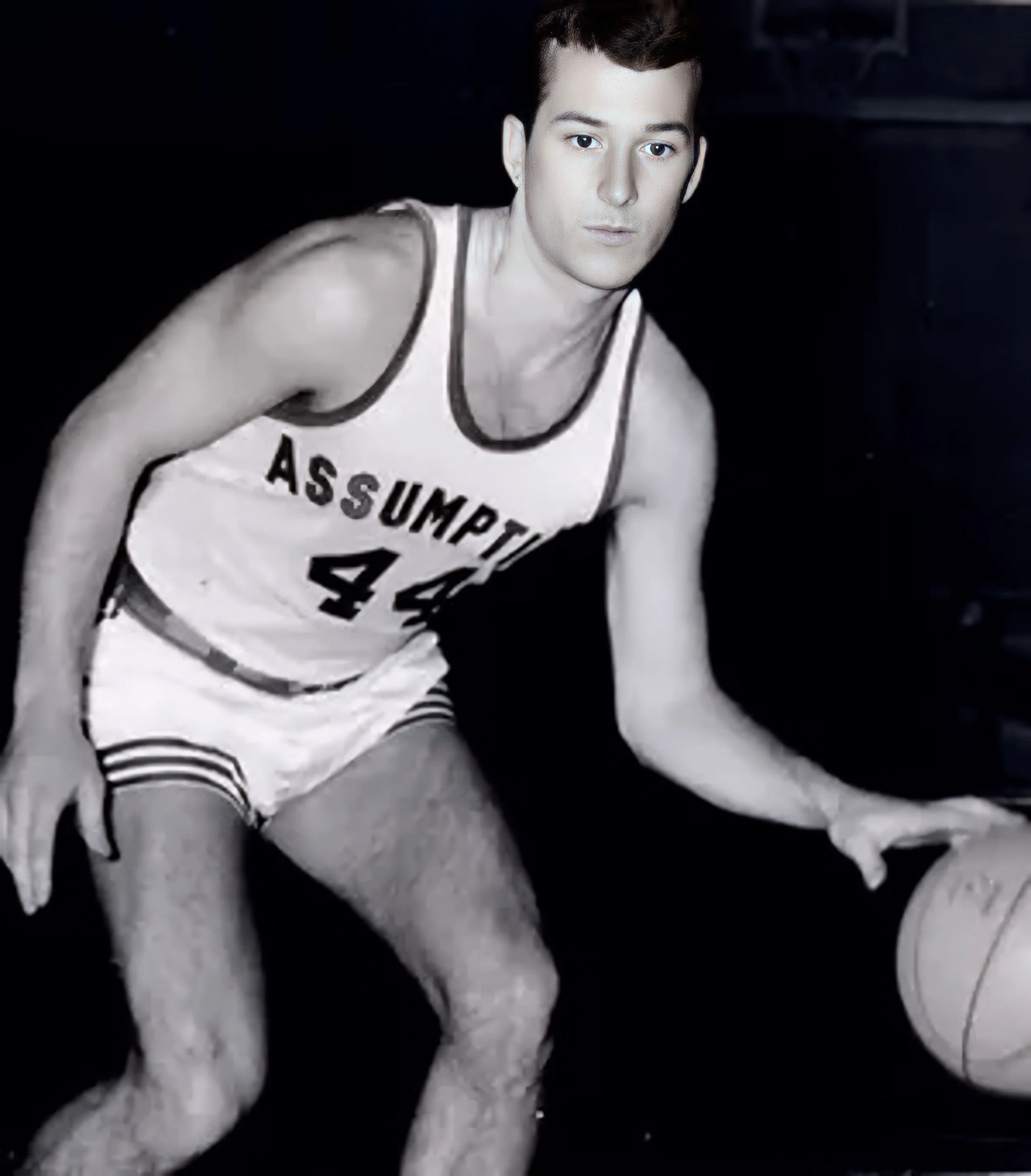
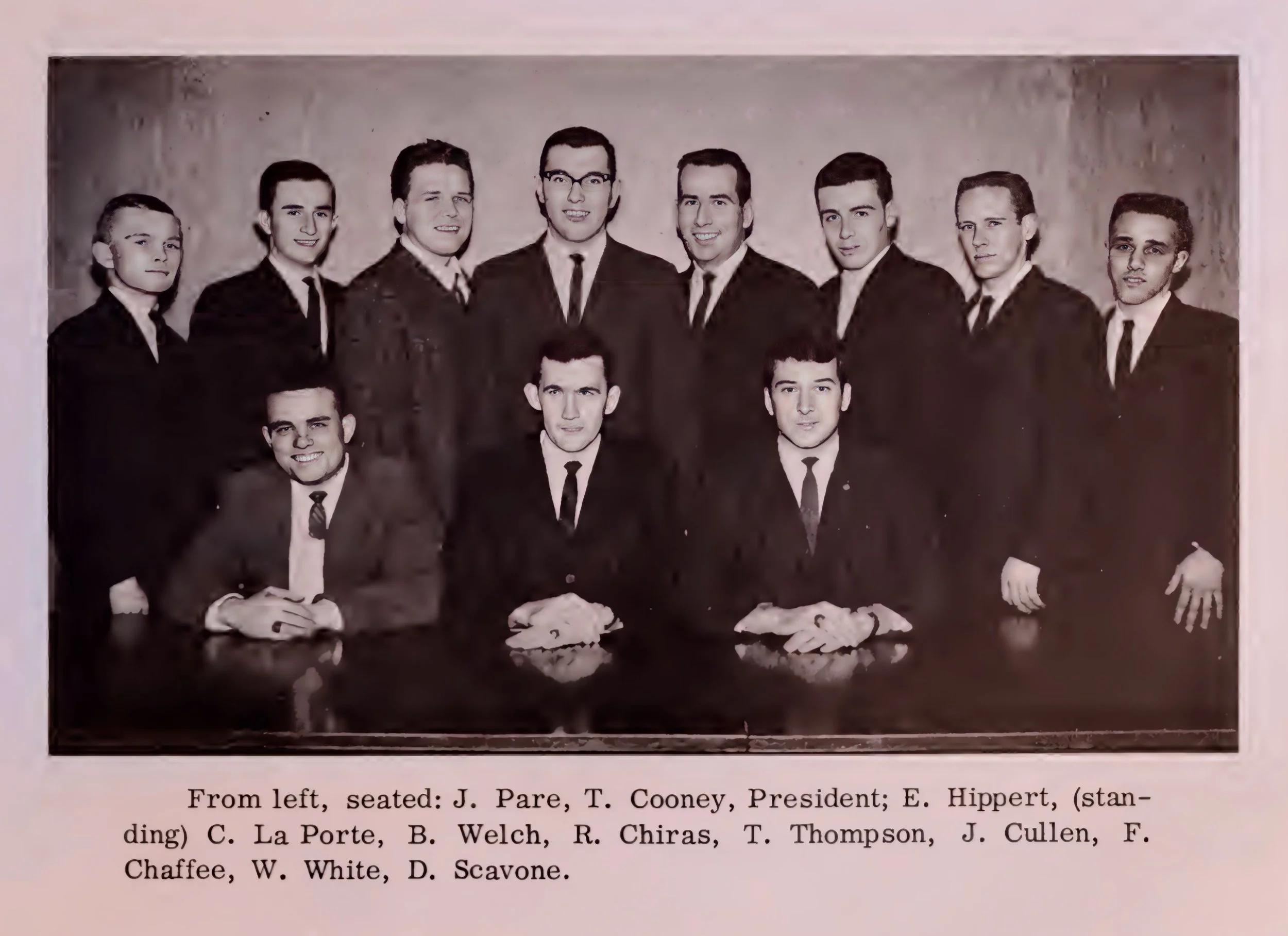
Meet coach Ed “Fast Eddie” Hippert. Coach Hippert is a celebrated figure in the Worcester, Massachusetts sports community, best known for his impactful and successful career as a basketball, baseball, football, and tennis coach at both the high school and collegiate levels. An extremely stylish man (voted best-dressed in college) and a standout player in his own right, he is an inductee of the Assumption University Hall of Fame (Class of 1962). He is also my Father in-law.


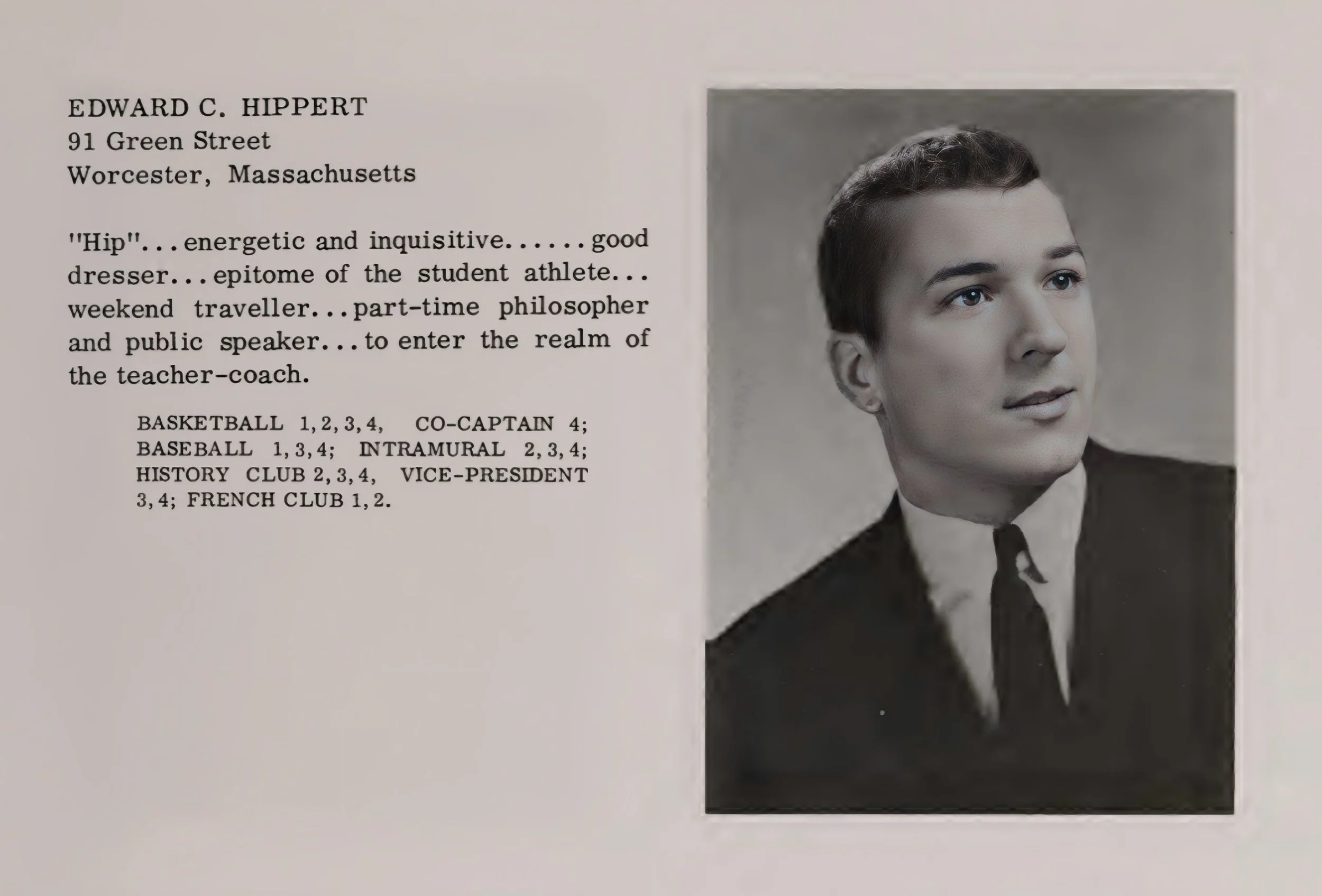

An iconic legacy that deserves its own style
Coach Hippert built a lasting legacy on the sidelines, notably guiding Worcester State University's men's basketball team to an NCAA Tournament appearance during his tenure in the 1970s. His high school coaching career was equally distinguished, featuring multiple Clark Tournament titles with Leicester High School in the late 1960s and David Prouty High School in the early 1980s. In recognition of his lifetime of contributions to the sport, he was inducted into the Massachusetts Basketball Coaches Association Hall of Fame in 2003. Later in his career, and after more than 75 (75!!!) seasons as a head coach, he remains active in the local sports scene, serving as a varsity tennis coach at Saint John's High School in Shrewsbury.
The verdict: When in doubt, wear Navy!
Here are 3 Ways to Style the Navy Blazer:
The "Power" Play (Corporate/Formal):
The Look: Double-breasted navy blazer with gold buttons.
Pair With: Charcoal grey wool trousers, a crisp white spread-collar shirt, and a deep burgundy or red tie.
The Shoe: Black cap-toe Oxfords.
Why it works: The grey trousers ground the look in business professionalism, while the gold buttons add a touch of executive authority.
The "RL" Standard (Smart Casual):
The Look: Single-breasted doeskin (or hopsack) blazer.
Pair With: Medium-wash straight-leg denim (no rips), an Oxford Cloth Button Down (OCBD) in light blue or pink, and a brown leather belt.
The Shoe: Brown leather loafers (penny or tassel) or suede chukkas.
Why it works: This is the quintessential Ralph Lauren mix of high and low. It says you respect tradition but aren't bound by rules.
The "Weekender" (Casual):
The Look: Unstructured navy cotton or linen blazer.
Pair With: White, Beige or Olive chinos, a horizontal striped Breton shirt (or a high-quality white T-shirt).
The Shoe: Clean white leather sneakers or boat shoes.
Why it works: It channels the nautical history of the garment without looking like you are wearing a costume.
Alright beautiful people! these are my two cents on the iconic Navy Blazer. Take what you have learned here today, put on your Navy blazer and own your style! - JH